Jordan Braun · 9 October 2026
Shifts in Backend Architecture Choices Among Independent Web Publishers Over the Past Decade
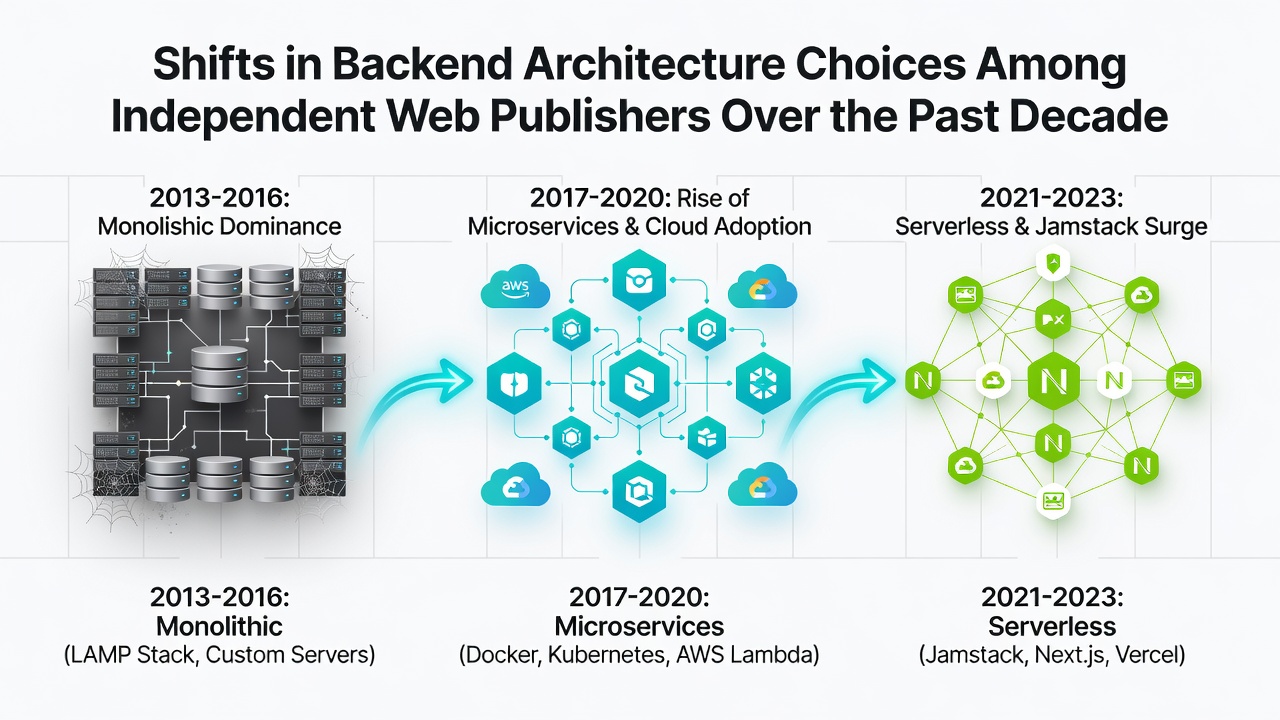
Independent web publishers began the decade with reliance on traditional LAMP stacks that combined Linux servers, Apache, MySQL databases, and PHP applications hosted through shared providers, while many maintained single-server deployments to keep operational expenses low and content updates straightforward. Data from industry surveys indicate that over 70 percent of small sites operated this way in 2016, yet rising traffic volumes and security requirements prompted gradual migrations toward virtual private servers and managed cloud instances by the late 2010s.
Early Infrastructure Patterns and Initial Transitions
Observers note that publishers frequently managed their own updates and security patches on dedicated or shared hosts during this period, and those who experienced downtime from traffic spikes often turned to basic caching layers or content delivery networks to maintain performance. Research indicates that costs for entry-level VPS offerings declined steadily between 2015 and 2020, which allowed more creators to test containerization tools such as Docker without committing to full infrastructure overhauls. One publisher documented in case studies moved from a single shared host to a containerized setup on a mid-tier cloud provider after experiencing repeated database bottlenecks during peak publishing cycles.
Adoption of Cloud Services and Container Technologies
By the midpoint of the decade, figures reveal increased use of services from providers including Amazon Web Services and Google Cloud Platform, where independent operators deployed applications in containers that scaled automatically during content launches or viral posts. Studies from academic institutions such as those affiliated with the University of Toronto show that container orchestration platforms reduced manual server management time for solo publishers by approximately 40 percent on average, although initial setup complexity remained a barrier for those without prior systems experience. And yet many continued blending these tools with static site generators to minimize backend load while preserving dynamic elements like comment systems or user accounts.
Rise of Serverless and Edge Computing Approaches
Serverless architectures gained traction after 2018 as platforms such as AWS Lambda and Vercel functions allowed code execution without persistent server provisioning, and data compiled by research groups show that adoption among independent publishers reached nearly 35 percent by 2023. Publishers integrated these functions for tasks including form handling, image optimization, and personalized content delivery, which cut infrastructure bills while shifting maintenance responsibilities to cloud vendors. A second wave followed with edge computing deployments that positioned code closer to end users, and reports from European regulatory bodies on digital infrastructure highlight how latency reductions benefited sites targeting international audiences without additional regional server investments.
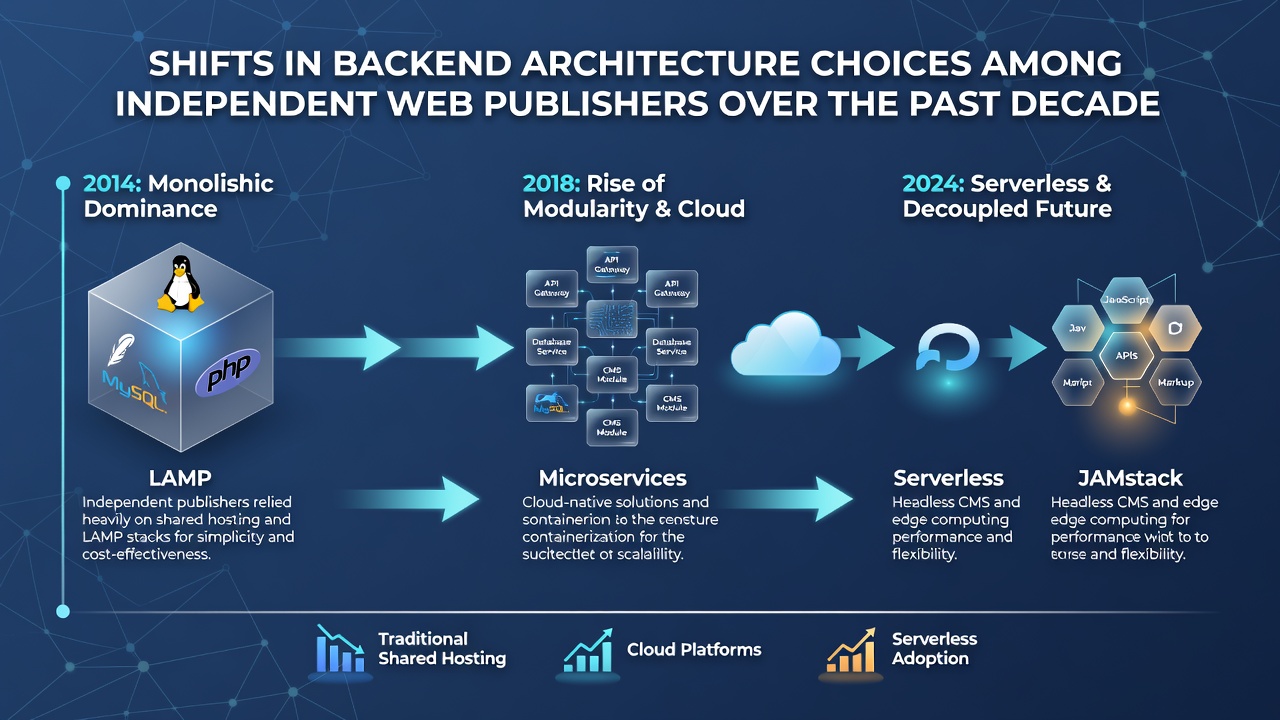
Headless content management systems emerged alongside these changes, decoupling the editorial interface from the public-facing delivery layer and enabling publishers to connect multiple front-end frameworks or static outputs from a single content source. Those who studied migration patterns found that sites using headless approaches often achieved faster page loads and easier multi-channel publishing, although integration with existing databases required careful planning. External analyses from sources such as Australian government digital economy reports track similar infrastructure experimentation across niche content creators between 2020 and 2025.
Key Drivers and Measured Outcomes
Cost predictability, security patching automation, and performance consistency drove many of these shifts according to aggregated platform telemetry, while regulatory expectations around data privacy encouraged adoption of architectures with clearer logging and access controls. Observers point out that independent operators who combined static generation with selective serverless endpoints reported fewer incidents of downtime compared with earlier monolithic configurations. Research indicates measurable improvements in deployment frequency as well, with some publishers releasing updates multiple times per week rather than relying on monthly maintenance windows.
Conclusion
Over the ten-year span, backend choices among independent web publishers evolved from resource-constrained shared environments toward flexible combinations of containers, serverless functions, and edge delivery systems that align with variable traffic patterns and limited operational resources. These transitions reflect broader availability of managed services alongside declining hardware management burdens, and continued monitoring through 2026 shows sustained experimentation with hybrid models that balance control and convenience for niche content operations.