Jonas Foster · 11 September 2026
Patterns in Solo Digital Publishing Infrastructure
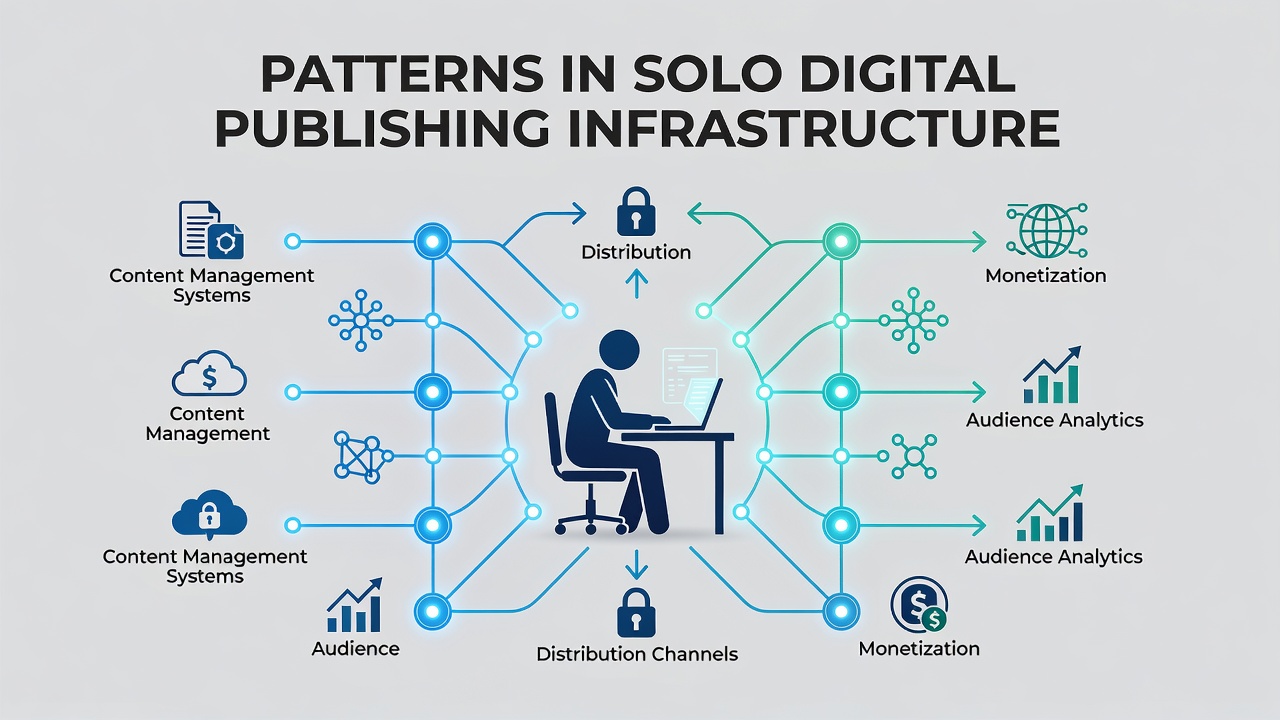
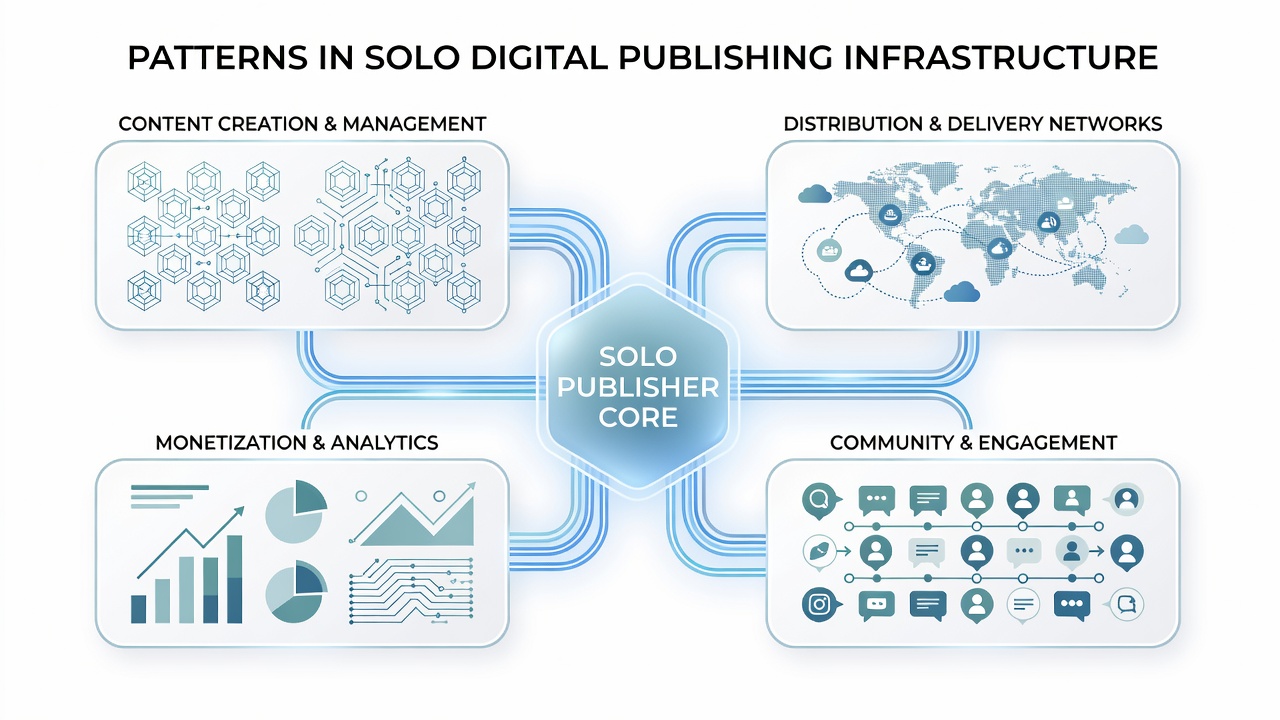
Digital publishing for independent operators has developed distinct infrastructure patterns over recent years, with many relying on modular stacks that separate content storage, delivery networks, and analytics layers. These setups often combine static site generators with content delivery networks to handle variable traffic loads while maintaining low operational overhead, and data from industry reports shows adoption rates climbing steadily through 2025 and into 2026.
Core Components in Individual Publishing Systems
Many solo publishers structure their systems around lightweight databases paired with API-driven front ends, allowing updates without full server restarts, whereas others integrate headless content management with version control repositories to track changes across multiple contributors even when teams remain minimal. Researchers at academic institutions have documented how these choices reduce single points of failure, and figures from government statistical agencies indicate that over 60 percent of small-scale digital outlets in North America now employ some form of decoupled architecture.
Hosting decisions frequently follow patterns centered on virtual private servers or container orchestration platforms, with operators distributing assets across regions to improve latency; in September 2026, updates to major cloud provider pricing models further encouraged this geographic spread for cost-sensitive publishers. Observers note that backup routines often incorporate automated snapshots stored in multiple locations, and studies from European research bodies confirm that such redundancy correlates with higher uptime metrics in independent operations.
Workflow Automation and Tool Integration
Automation scripts handle tasks from content ingestion to SEO metadata generation, connecting publishing pipelines directly to analytics services so that performance data informs immediate adjustments. Those who manage these systems often link build processes to external triggers like repository commits, creating repeatable deployment cycles that minimize manual intervention, while reports from Australian government sources highlight efficiency gains in workflows that incorporate continuous integration tools.
Security layers typically include certificate automation and access controls managed through centralized identity providers, and data indicates rising use of encrypted storage for both published assets and draft materials. Industry analyses reveal that solo operators increasingly adopt monitoring dashboards fed by log aggregation services, allowing quick identification of traffic anomalies without dedicated staff.
Scaling and Performance Considerations
Traffic growth prompts shifts toward edge computing resources that cache content closer to users, and patterns show many publishers testing serverless functions for dynamic elements like search or comment systems. Canadian statistical data on digital media demonstrates that sites using these distributed models experience measurable reductions in load times during peak periods, while integration with open-source libraries supports custom extensions without licensing fees.
Content delivery networks serve as a common backbone, routing requests through optimized paths and providing built-in protections against distributed denial-of-service attempts. Experts tracking these developments point to consistent patterns where operators combine multiple CDN providers for failover, ensuring continuity when one service encounters regional issues.
Data Management and Compliance Patterns
Record-keeping practices often center on structured logs that feed into compliance reporting tools, particularly as regulations evolve across jurisdictions. Publishers align storage policies with requirements from bodies such as those overseeing data protection in the European Union and equivalent frameworks in Asia-Pacific regions, and evidence from regulatory summaries shows increased documentation of data retention periods in solo operations.
Analytics implementations frequently rely on privacy-focused alternatives that limit third-party tracking, with many setups routing metrics through self-hosted instances to retain control over raw data. These configurations support detailed reporting while meeting consent standards, and cross-regional comparisons from international trade organizations indicate convergence toward similar technical safeguards.
Conclusion
Patterns in solo digital publishing infrastructure continue to emphasize modularity, automation, and distributed resources that support independent operation at scale. As of September 2026, available data illustrates steady refinement of these approaches across different regions, driven by both technological availability and regulatory expectations. Operators maintain focus on reliable delivery and efficient workflows through the integration of established components rather than bespoke solutions.